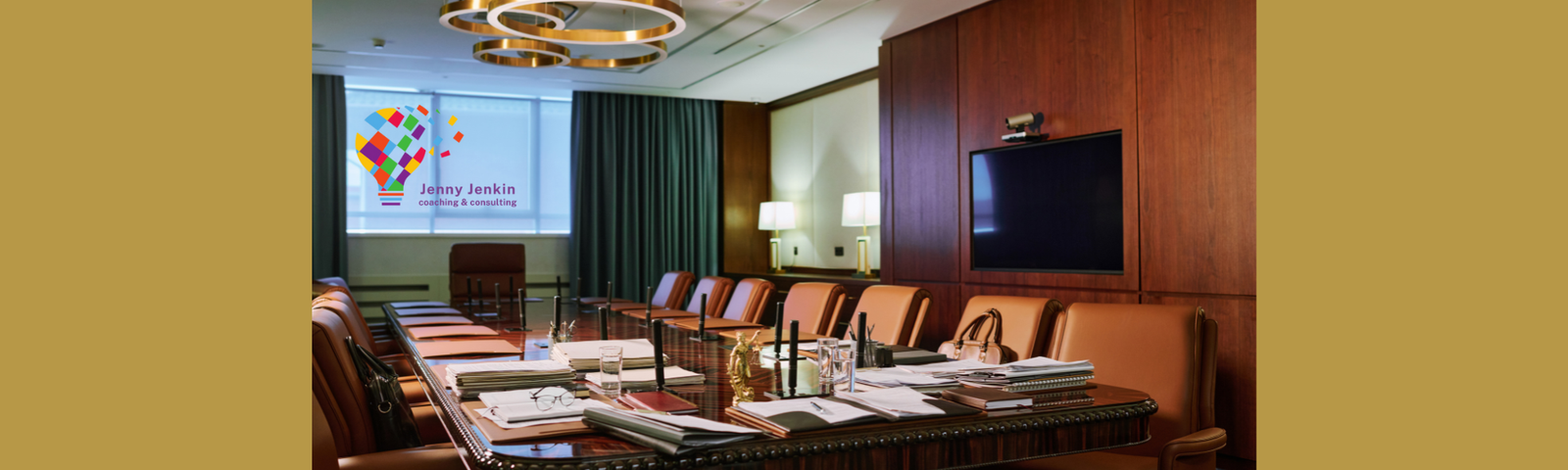
When every decision has to go through five committees, three rounds of consultation and a legal reputation check, you don’t get good decisions; you get a value-depleting soul-sapping process and glassy-eyed staff.
And in the current crisis gripping UK higher education, I have an inkling that the lumbering weight of the committee cycle is playing its part in squashing the agility HEIs so badly need.
To find out more, I recently ran a LinkedIn poll asking:
What gets in the way of good decision-making in your organisation?
57 people voted. Here’s what they said:
- 40% – Cautious culture / committee-led
- 26% – Jostling and politicking
- 7% – Inadequate data and intel
- 26% – Dominant voices/closing debate
There’s nothing scientific about my poll. Nevertheless, people clearly feel strongly about the risk-averse committee-driven decision-making that strangles creativity and innovation before it sees the light of day. I know that I do!
The reality is that when an organisational culture tacitly values tradition and consensus above effective decision-making, it breeds hesitation, decision aversion and an absence of accountability. None of which is consequence-free. But suggest to any university that they abandon their sluggish and burdensome committee structure and you’ll be met with incredulity and a ‘you just don’t get it’ sort of an air!
So, why do we have committees? Well, councils/boards/committees provide for collective authority which was considered to temper individual power. They date back back to ancient governance systems such as those seen in ancient Greece and Rome. It appears the first formal committees in the UK cropped up in Parliament in the 1600s, when small groups were set up to get things done more efficiently. There’s a joyful irony in that sentence.
By the 19th century, universities had adopted the same model. Committees were seen as the very essence of collegial life – fair, balanced, democratic. No single person wielding too much power; decisions made through calm discussion and collective wisdom. Frankly, this sounds rather marvellous, and you can see how- wisely used – this could be a sensible tool to offset the prevailing problems.
Fast-forward a couple of centuries, and we’ve turned that noble idea into a full-time hairball of complexity, procrastination and avoidance. Every issue not immediately dealt with spawns a working group with an inordinately long title, every working group spawns a sub-group. We consult, refine, and minute ourselves into exhaustion.
But it’s increasingly unclear whether this vast industry delivers real value to our organisations, our students, our stakeholders, our funders. But – in the interests of balance – I ought to add that the regulators rather like them!
The truth is, committees endure because they meet three basic needs: the need to be involved, the need to avoid a scary decision and the need not to be blamed. Ok, I’ll grant you, that’s an opinion, not a truth! But in a sector that derives deep comfort from process rather than progress, it’s no wonder they’ve become an untouchable feature of our natural habitat.
The Cautious Culture Problem
Committees can foster risk avoidance because of the weight attached to consensus, ‘due process’, (what a term!), and the tacit desire to just slow things down.
And as a result, decision-making becomes a ritual of reassurance. Proposals get diluted in the interests of gaining consensus (from those who happen to be in the room at the time). Papers are written and rewritten to anticipate every possible objection. Language is softened to avoid criticism, rather like the BBC’s reporting, where the imperative of balance outstrips the professional desire to deliver excellent journalism.
And by the time a decision finally emerges (if it gets that far), it’s lost its edge or its relevance.
And there are emerging voices in this space. In his excellent article for AdvanceHE, John Rushforth describes how many universities “take months or even years to materialise key decisions” due to overloaded governance structures and overpopulated committees. Amongst other things, he points to huge governing bodies (20+ members) and heavy committee workloads as obstacles to agility. advance-he.ac.uk
Why Caution Has Become the Default
The sector averts its eyes from its risk aversion, and the committee system lends legitimacy to this behaviour by locking decision-making into circular complexity. In fairness, the risk aversion is wholly understandable in the context of:
- The significant reduction in the real terms value of domestic fees,
- rising costs and looming deficits
- political scrutiny and growing reputational risk in a febrile national context
- an anxious and concerned staff base in the wake of restructures and change
In such conditions, nobody wants to be the one who gets it wrong.
So decisions get shared, deferred, and diluted until they’re safe but toothless.
The irony, of course, is that this risk-aversion creates new risk: lost opportunities, eroded trust, and organisational drift.
The Cult of Personality
Let’s surface some of the personality dynamics that infiltrate committees in our HEIs.
In many HEIs, the tone is set by a small number of powerful senior figures whose influence seeps through every layer of governance. Their preferences, style and level of commitment to psychological safety often determine whether debate is encouraged or closed down.
In these circumstances, it doesn’t take long for others to learn that speaking up is career-limiting. When a dominant personality in the room or on the Teams call reframes dissent as ‘negativity’, people quickly fall silent.
And this can lead to the ossification of decision-making cultures not (always) through bad intent, but through the slow normalisation of deference.
This is a theme that has cropped up again and again in my coaching work. And its worth pointing out that women and marginalised groups tend to be the voices that are most swiftly silenced or rejected in the performance space of the committee. That cannot be OK in a sector which prides itself on its equality and inclusion credentials.
And the reverse is also true. When leaders have the courage to invite robust debate, share the rationale behind decisions, and model curiosity instead of defensiveness, others follow suit. Again, in the interests of balance, I have received several comments about exceptional committees which have delivered effectively and efficiently, largely through the skill and determination of the Chair. I honour and acknowledge that. We clearly need more of those exceptional chairs in the system to enliven and sharpen our committees.
What the Sector Needs Now
If HEIs are to survive these chaotic times, I suggest that a simple shift from cautious to conscious decision-making is a wise first move. That means:
- Slimmer, faster governance – fewer layers, clearer non-over-lapping mandates, tighter timeframes.
- Named accountability – every decision should have a visible owner, not a faceless committee.
- Cultural permission – leaders modelling transparency, curiosity, and genuine listening.
This is not, of course, a simple shift. But it strikes me that purposeful movement in this direction can only support HEIs in developing an adaptable, responsive, and clear approach to decision making rooted in a default assumption of psychological safety, openness to challenge and equality of contribution.
A Thought for Your Next Meeting
Notice who speaks first and whose views quietly steer the room.
Notice when decisions get deferred, remitted elsewhere, sent back for more analysis.
And for a more benign take on committees, check out an earlier blog of mine written when I viewed them slightly more positively! http://bit.ly/3VY5UnR
🔸 🔸 🔸
I work with women leaders in HE to help them feel in control so they can thrive in their careers and lead with confidence and impact.
DM me if you’d like to chat, or book a free call via my LinkedIn profile.